Webb observations show early galaxy cluster with unexpectedly dense core, ScienceDaily reports
Three studies of cluster XLSSC 122, about 10.4 billion light-years away, suggest some cosmic structures may have formed faster than current models predict.
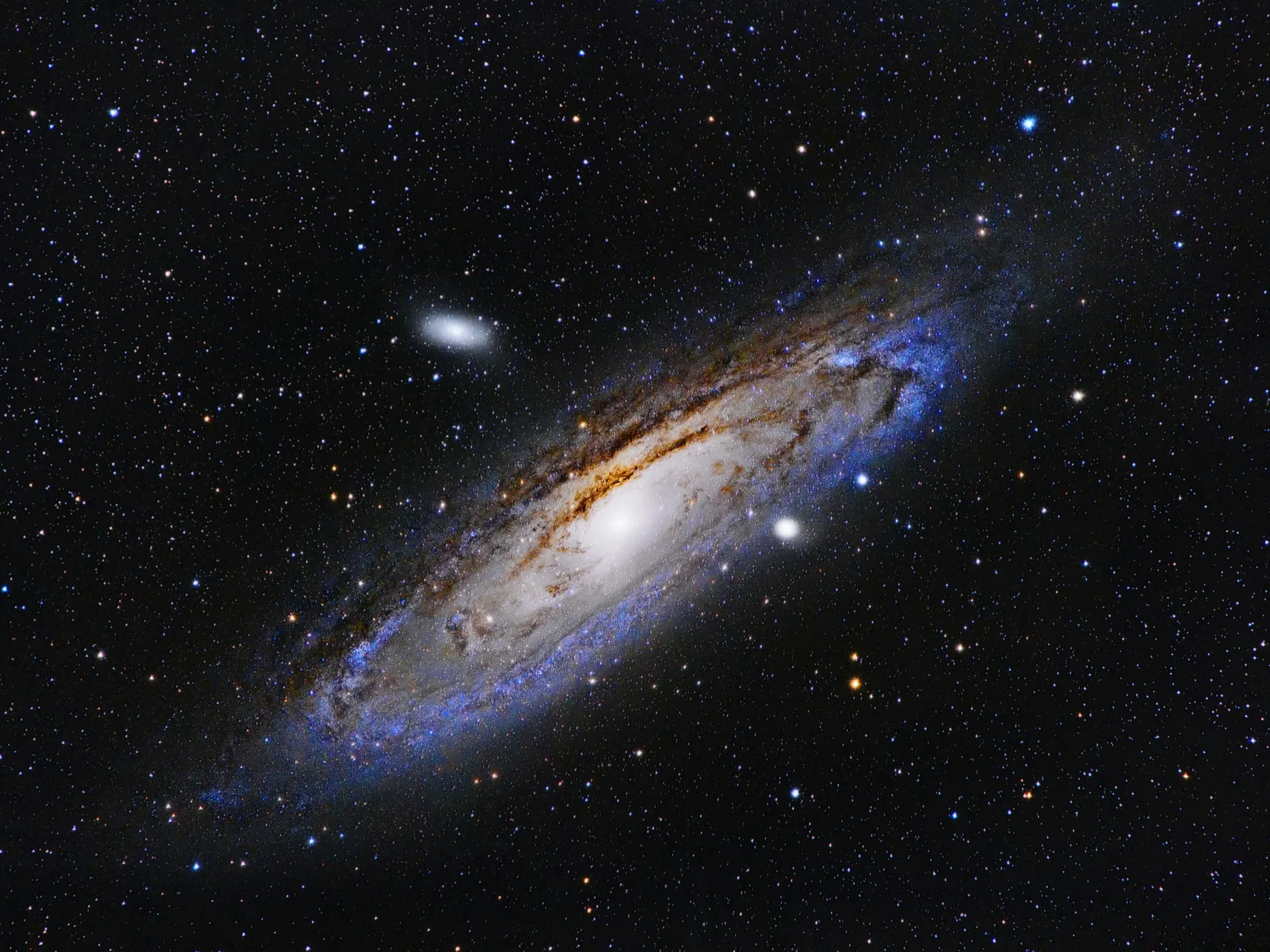
A distant galaxy cluster seen by NASA's James Webb Space Telescope holds far more mass in its centre than standard models of the universe predict for its age, according to ScienceDaily. The report is based on materials provided by Caltech IPAC.
The cluster, XLSSC 122, lies about 10.4 billion light-years from Earth. It is the subject of three recent studies led by researchers at IPAC, Caltech's science and data center for astrophysics and planetary science. According to ScienceDaily, the findings make it the most distant galaxy cluster known to show strong gravitational lensing. In this effect, the cluster's gravity bends light from galaxies behind it, which lets astronomers measure matter they cannot see. The work was presented on June 17, 2026, at the 248th meeting of the American Astronomical Society.
The cluster dates to a period called "cosmic noon," about 10 billion years ago. ScienceDaily reported that standard cosmological models expect massive structures to have grown more gradually, so a cluster this concentrated at that stage is surprising.
“XLSSC 122 is one of the first clusters we know of that formed in the universe, and it has a mass concentration that doesn't agree with our cosmological model predictions.”Kyle Finner, staff scientist at IPAC and lead author of the first paper
The finding matters because most of the lensing comes from dark matter, according to the report. Mapping how dark matter was spread out billions of years ago is a way to test theories of how the universe developed.
Two further studies, first authored by Zachary Scofield and Hyungjin Joo at Yonsei University, added more detail. Using weak lensing together with X-ray and radio data from other telescopes, the team concluded that the cluster is still merging. The researchers also detected intracluster light, a faint glow from stars that are no longer bound to individual galaxies. ScienceDaily described this as the earliest known detection of such light. Near the centre of the cluster, its shape closely matched the dark matter distribution inferred from lensing.
Much is still unknown. It is not yet clear whether XLSSC 122 is a rare case or part of a wider pattern. ScienceDaily reported that a larger sample of early clusters will be needed to decide this. The researchers plan to find and study dozens more by first spotting candidates in wide-area X-ray and radio surveys. It is also unknown whether intracluster light follows dark matter in other clusters. If it does, it could become a new tool for mapping dark matter.
"It's still early in the JWST era," Finner said, adding that data on "tens or hundreds of these types of objects" would let researchers really start putting cosmological models to the test.