Voyager 1 recovers after 48-hour outage, nears one light-day from Earth
A power-saving swap of heaters and a tape recorder brought the probe back into contact, Universe Today reported, ahead of a distance milestone on November 18.
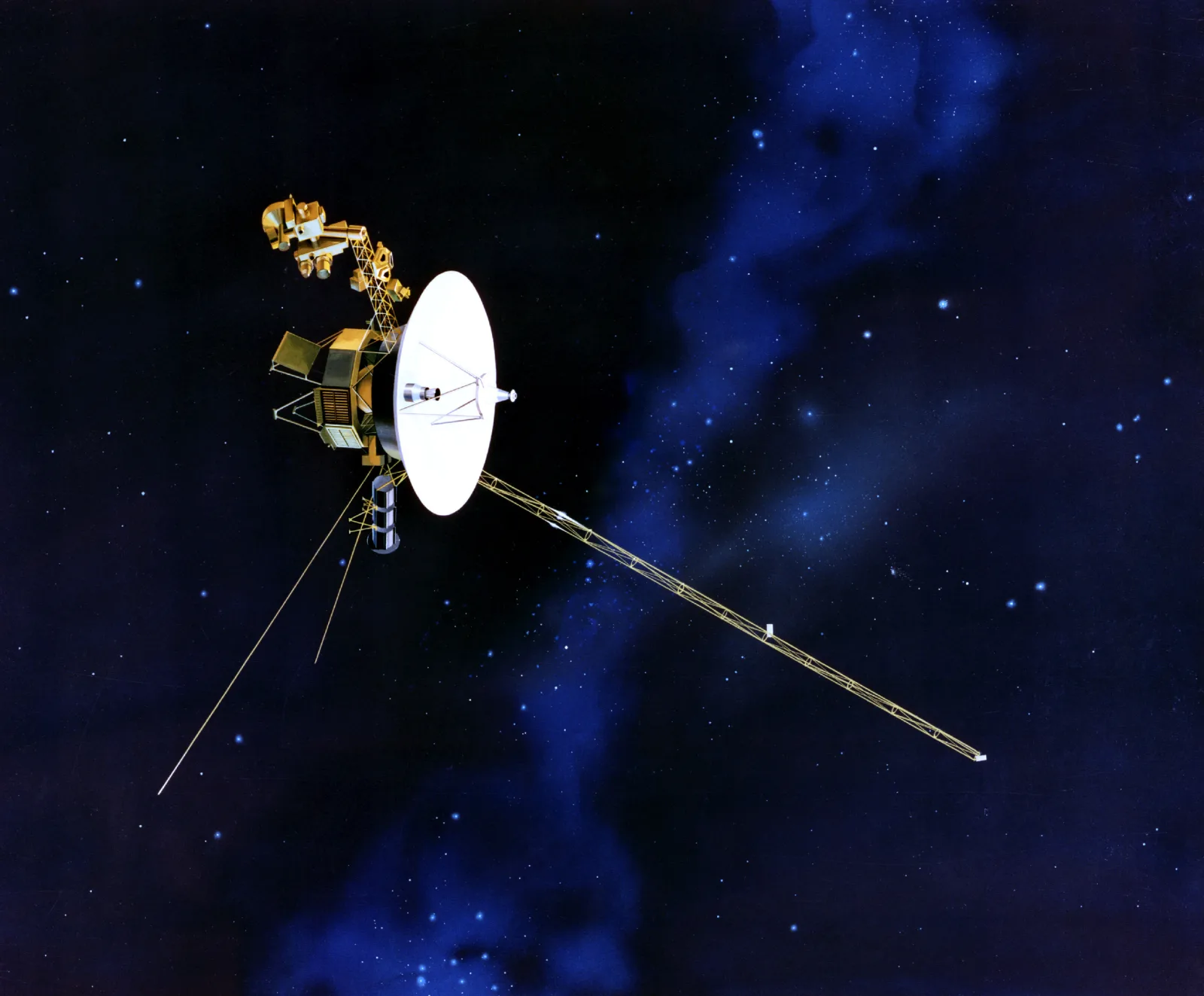
NASA's Voyager 1 spacecraft is back in contact after a brief communications loss, and is set to become the first human-made object to reach one light-day from Earth, according to Universe Today, the only source for this report.
The outage began on October 20 and lasted 48 hours, Universe Today reported. Engineers restored the spacecraft with a fix dubbed the "Big Bang", which swapped three units for three lower-power secondary options at the same time. The units replaced were two primary heaters and an old 8-track digital tape recorder. Universe Today said the swaps had to happen together because those units also heat the spacecraft and keep it working in the cold of deep space.
“This is the first time we've seen the spacecraft do something like this, but we are also at a point in the mission where we have to expect the unexpected.”Kareem Badaruddin, quoted in a NASA press release
The same method was used successfully on Voyager 2 in August, the outlet reported.
The fix matters because the two Voyagers are losing power. They run on plutonium-fueled radioisotope thermoelectric generators, and Universe Today said the loss amounts to about 4 watts a year. Voyager 1 now uses a little over 200 watts. That decline has already forced controllers to turn off instruments, including the Low Energy Charged Particle experiment in early 2026, according to the outlet. The missions launched with 10 instruments in 1977.
Voyager 1 still runs its Plasma Wave Subsystem and a magnetometer. Universe Today reported that without the Big Bang swap, controllers would have had to turn off another crucial instrument in 2027.
The outlet said Voyager 1, travelling at 16.9 kilometers per second relative to the Sun, will reach the one light-day mark on Wednesday, November 18, at 5:16 AM EST. That is roughly 26 billion kilometers, or 172 astronomical units, away. The Voyagers are the first missions to directly sample the region of space beyond the heliosphere, according to Universe Today.
Several questions remain open. The cause of the October outage has not been explained. Badaruddin said in the release that the team is "eager to understand what happened."
Universe Today also reported that controllers will likely face more signal outages in the coming years, as NASA's Deep Space Network tracks ever fainter signals from the two spacecraft. The outlet did not say how long the remaining instruments can keep running on the shrinking power supply. Voyager 1 launched on September 5, 1977, and would mark 50 years in space next year if it keeps operating.