Study rules out Jupiter-sized planets in nearby 70 Ophiuchi star system
Researchers say a stellar wobble that once suggested a giant planet came from activity on the stars. Smaller worlds may still be there.
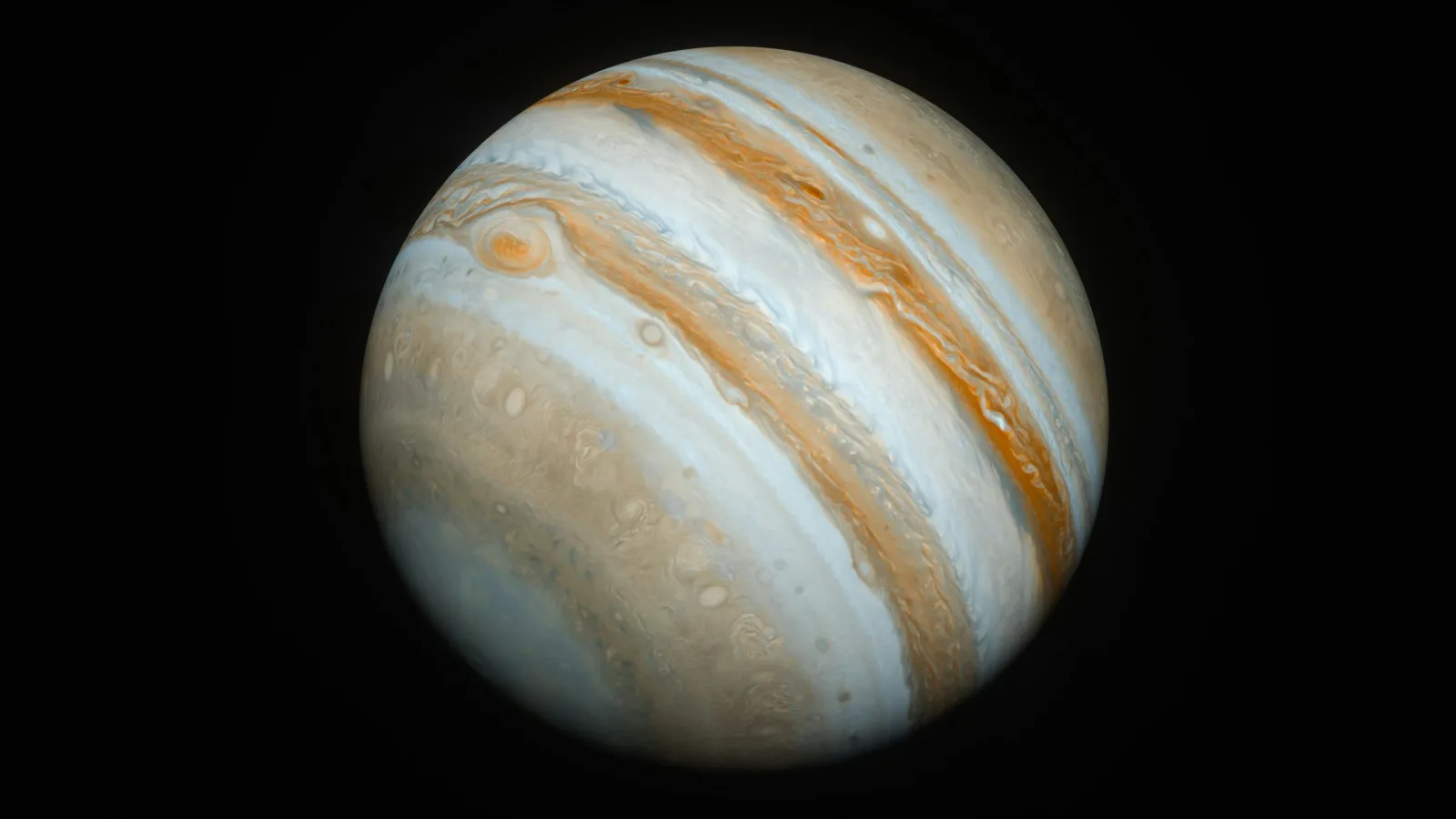
A wobble that once suggested a giant planet in a nearby binary star system was actually caused by activity on the stars themselves, according to ScienceDaily, which published material provided by the University of Michigan.
The study was led by the University of Michigan and published in The Astrophysical Journal. It examined 70 Ophiuchi AB, a pair of stars about 16 light-years from Earth. The researchers found no planets as massive as Jupiter or larger within 5 astronomical units of 70 Oph A, or within half an astronomical unit of 70 Oph B. An astronomical unit is the average distance between Earth and the Sun.
The team combined roughly a century of historical measurements with new observations from the Magellan Clay Telescope in Chile and the Harlan J. Smith Telescope in Texas. They concluded that changes in surface activity on the stars over time, not the pull of a giant planet, explained the shifts in radial velocity that had looked like a planetary signal.
“It's a cautionary tale about how stellar activity can mimic planet signals using the radial velocity.”Michael Meyer, senior co-author and chair of the University of Michigan's astronomy department
The system has a long history. ScienceDaily reported that in 1855, British astronomer William Jacob proposed that it hosted a planet. That made it the first star system with an officially proposed exoplanet candidate. His claim was later rejected, but measurements over the following 171 years never fully ruled out giant planets in the system's inner regions.
The finding matters partly because the system is so close. It is the third closest binary star system to Earth, after Alpha Centauri and 61 Cygni. Knowing which planets are not there could make future searches more efficient. Meyer said the system is one of a handful of targets for a space mission called SHERA, which a team including the University of Michigan is studying. He said it "will certainly be a target of flagship missions, such as NASA's Habitable World Observatory."
Much remains unknown. The search was not designed to detect smaller worlds. Planets the size of Saturn or smaller could still orbit either star, including rocky planets in the habitable zone. That is the region where temperatures could allow liquid water on a planet's surface, if the planet has a suitable atmosphere. Even if such a planet were found, the report noted, that alone would not show that life exists there.
Yiting Li, a postdoctoral researcher at the University of Michigan, said "the study sets an upper limit, not a ban, on planets," and added that she expects other planets will be found in the system.