Search of nearby binary star 70 Oph AB finds no giant planets, study reports
University of Michigan astronomers found that wobbles in the two stars come from stellar activity, not planets. Smaller worlds have not been ruled out.
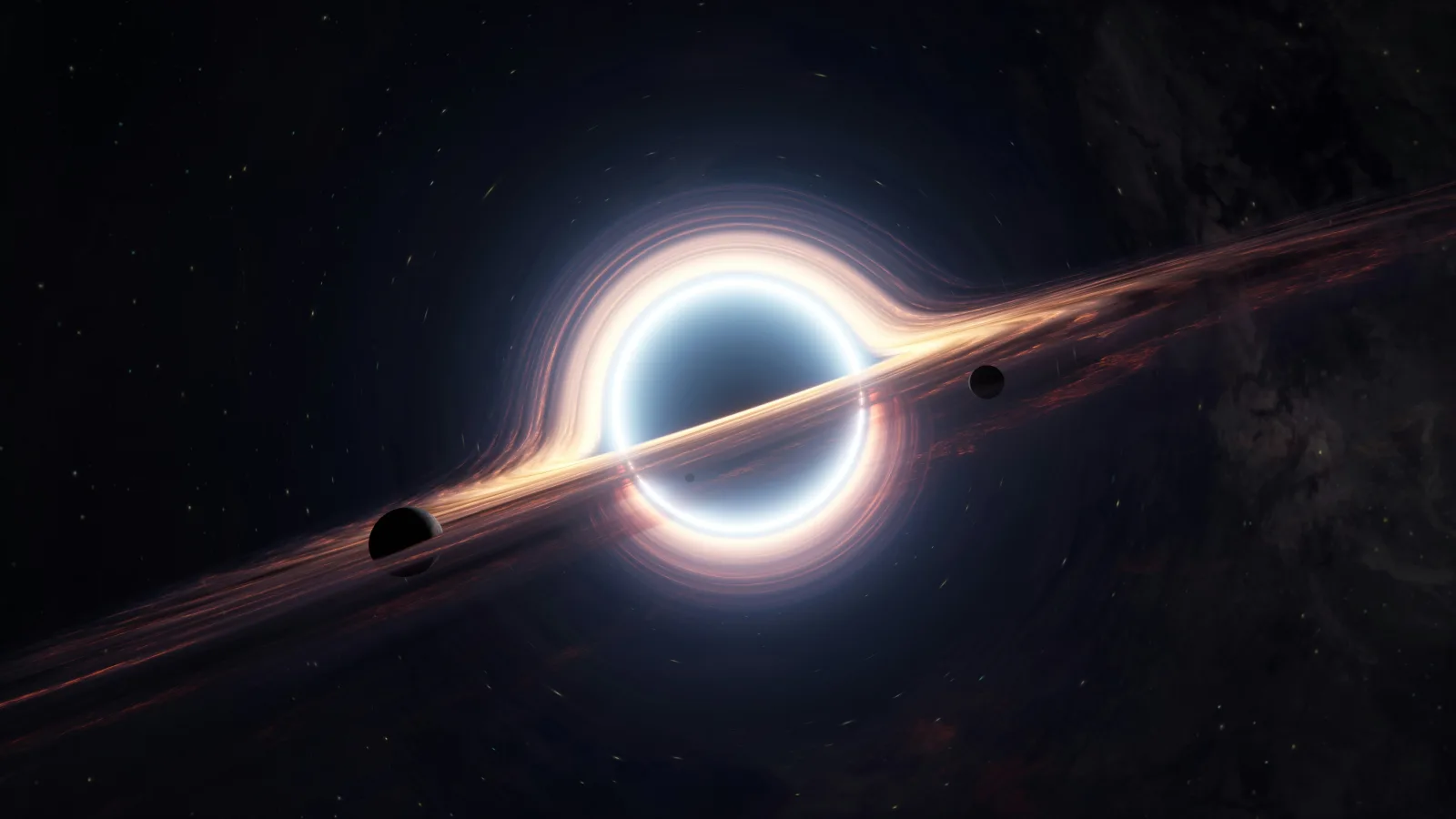
Astronomers searching the nearby binary star system 70 Oph AB have found no sign of Jupiter-size planets around either star, according to Universe Today, the only source for this report.
The study was led by Yiting Li, a postdoctoral researcher in the University of Michigan's Department of Astronomy, and published in The Astrophysical Journal, Universe Today reported. The team used the 6.5 m Magellan II Clay Telescope in Chile and its Planet Finder Spectrograph. During 2025 they took 499 radial velocity measurements of 70 Oph A and 334 of 70 Oph B. They combined these with archival data covering decades, including 27 years of radial velocity data for 70 Oph A.
The stars did show variable radial velocity measurements, but the researchers concluded that stellar activity, not orbiting planets, was the cause. In the paper, the authors wrote that they "detect no coherent planetary signals in either component."
For 70 Oph A, the results exclude Jupiter-mass planets inside about 5 au. For 70 Oph B, planets of about 0.25 to 0.3 Jupiter masses are excluded inside 0.5 au. The data still allow Saturn-mass or smaller planets on stable orbits around 70 Oph A out to about 2.5 au.
““It’s a mix of disappointment and excitement. We’re finding out that there isn’t a Jupiter-sized planet, but we’re also opening the latest chapter on this historic system.””Yiting Li, lead author, in a press release
The result matters because the system is a likely target for future telescopes, Universe Today reported. At a distance of 5.1 parsecs, the authors call it "one of the most favorable targets" for future missions looking for mature, terrestrial planets. Observing time on upcoming instruments will be in high demand, so knowing which targets to pick is part of the preparation.
The work also pins down the orbits and masses of the two stars very precisely, using more than a century of data. The authors wrote that this is "especially valuable for habitability studies in binary stars." Michael Meyer, a senior co-author and chair of the University of Michigan astronomy department, said the system is one of a handful of targets for a proposed space mission called SHERA, which focuses on binaries. He also called the study "a cautionary tale about how stellar activity can mimic planet signals using the radial velocity."
What the system actually holds is still unknown. The results leave room for an Earth-sized planet, according to Universe Today. Smaller planets that could be there will have to wait for more powerful instruments to look for them.
“The study sets an upper limit, not a ban, on planets,” Li said. “Given how prevalent planets are in our universe and in the Milky Way, I would wager that we’ll find there are other planets there.”