Search for nearby isolated black holes finds Gaia candidates, but no supporting signals
Researchers found five possible black holes within about 50 light-years of the Sun, but infrared and radio checks suggest they are unlikely to be real.
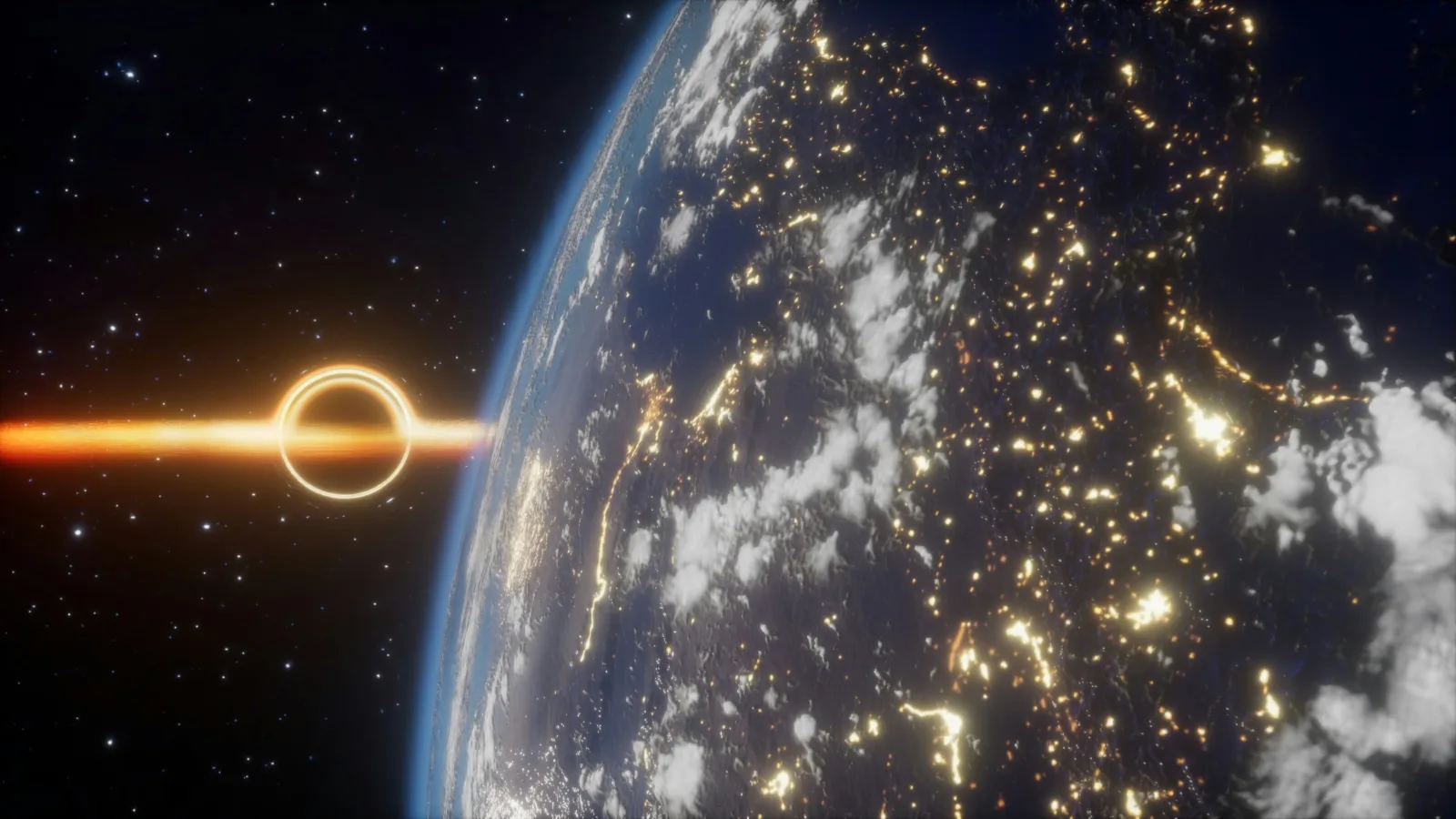
A search for isolated black holes within about 50 light-years of the Solar System turned up five candidates in data from the Gaia mission. Follow-up checks of infrared and radio catalogues found nothing to support them, according to Universe Today.
The study was published in The Astrophysical Journal. Its lead author is Abdurakhmon Nosirov of the Center for Astronomy and Astrophysics at Fudan University in Shanghai, the outlet reported. The team searched Gaia's Data Release 3 for objects within 15 parsecs of the Solar System. They found six sources and excluded one as a brown dwarf.
The authors wrote that all the candidates lie close to the Galactic plane, "making them likely spurious astrometric solutions." Possible causes include crowding from background sources or binary systems the models did not account for. The team then compared the candidates with the CatWISE infrared catalogue and the RACS and VLASS radio catalogues. Their models indicated that if the sources were black holes feeding on interstellar gas, CatWISE should have detected them. It had no matching sources.
“Our search for infrared and radio emission from these sources further suggests that they are unlikely to be black holes accreting from the interstellar medium.”The study's authors
The search matters because theory predicts many such objects. Universe Today reported that models put the number of stellar-mass black holes in the Milky Way at between about 100 million and 1 billion, and that most are expected to have no companion star. Unlike the supermassive black holes at the centres of galaxies, these are hard to find. The authors wrote that "there may be a few black holes" within 15 parsecs of the Solar System.
The researchers said a black hole inside one of the Local Interstellar Clouds could draw in enough gas to give off detectable emission. These clouds fill 5 to 20 percent of that nearby volume. Outside the clouds, the researchers said, the emission would fall well below what current and near-future instruments can detect. They added that spotting such objects through their pull on nearby stars is not realistic, because there are too few stars in the local area.
It is not yet known whether any isolated black holes exist that close, or exactly what they would look like. The authors pointed to "large uncertainties in the expected accretion spectra." Universe Today noted that other research suggests such objects would be very faint and show few distinctive features, which would make them hard to confirm with a single instrument.
The authors called for follow-up in radio, optical and X-ray bands to confirm what any candidate really is. They said future work will search radio and X-ray catalogues. Universe Today reported that the Square Kilometer Array is due to release more data in early 2027. The outlet quoted the researchers as saying that data "appears especially promising for this endeavor."