Hubble and Webb find 27 faint objects beyond Neptune that appear to keep traces of their origins
Even the smallest icy bodies in the survey seem to have changed little since the solar system formed, ScienceDaily reported, citing NASA material.
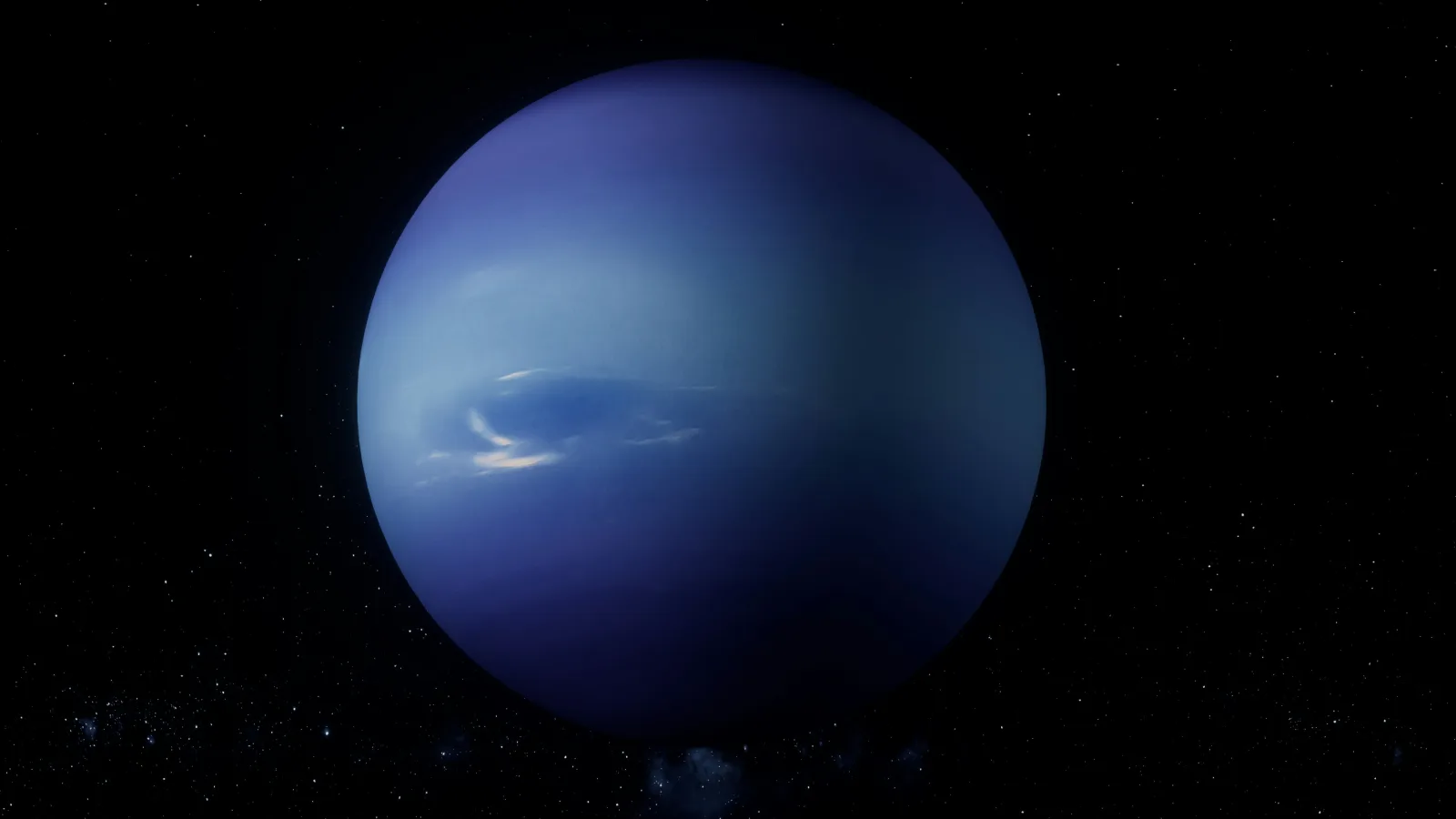
Astronomers using NASA's Hubble and James Webb space telescopes together have found 27 previously unknown objects beyond Neptune. Even the smallest of them appear to have kept surface features from when they formed, according to ScienceDaily, which published material provided by NASA.
ScienceDaily reported that the work is the deepest survey yet of trans-Neptunian objects (TNOs), the small icy bodies that orbit the Sun beyond Neptune. The results appear in two related studies published in The Astronomical Journal. The teams were led by PhD candidates at the University of Victoria in Canada, working under the guidance of the National Research Council of Canada, and at Northern Arizona University in Flagstaff.
Both telescopes watched the same patch of sky at the same time. Hubble collected visible light and Webb collected infrared light. That let researchers estimate the objects' sizes, track their orbits and compare their colors, which give clues to what their surfaces are made of. The smallest object was about 3 miles (5 kilometers) across, roughly five times smaller than the most sensitive ground-based telescopes can detect, according to the report.
Researchers had expected small TNOs to show signs of billions of years of collisions, which could have exposed fresh material and changed their colors. Instead, the new objects showed the same general color patterns as larger TNOs. This held for "cold" objects, which have mostly stayed where they formed, and for "hot" objects, which were scattered outward as the giant planets moved early in the solar system's history.
“"It's really fascinating to see that the smallest objects are somehow 'remembering' and preserving the history of how they were made."”Anastasia Morgan, Northern Arizona University PhD candidate who led the color study
Why it matters: these bodies never grew into planets, so they may hold a record of the conditions in which the solar system's building blocks formed. Webb's data also showed that the hot and cold groups have very similar size distributions, even though they formed in different regions.
"The process seems to be insensitive to disk conditions, producing similar planetesimal sizes whether the disk is hot or cold, and dense or fluffy," said Marielle Eduardo, the University of Victoria PhD candidate who led the size study.
Several questions remain open. The researchers found fewer very small TNOs than some planet formation models predict, and ScienceDaily did not report an explanation for the shortfall. It is also not yet known why the small objects' surfaces look unchanged. The objects may have been hit less often than assumed, or their surfaces may keep their original makeup even after collisions. According to the report, researchers have not yet worked out which explanation is correct.