Black holes of vastly different sizes may launch delayed jets at the same feeding point
A study in Nature Astronomy links late jets from star-shredding supermassive black holes to a threshold already seen in much smaller ones, ScienceDaily reported.
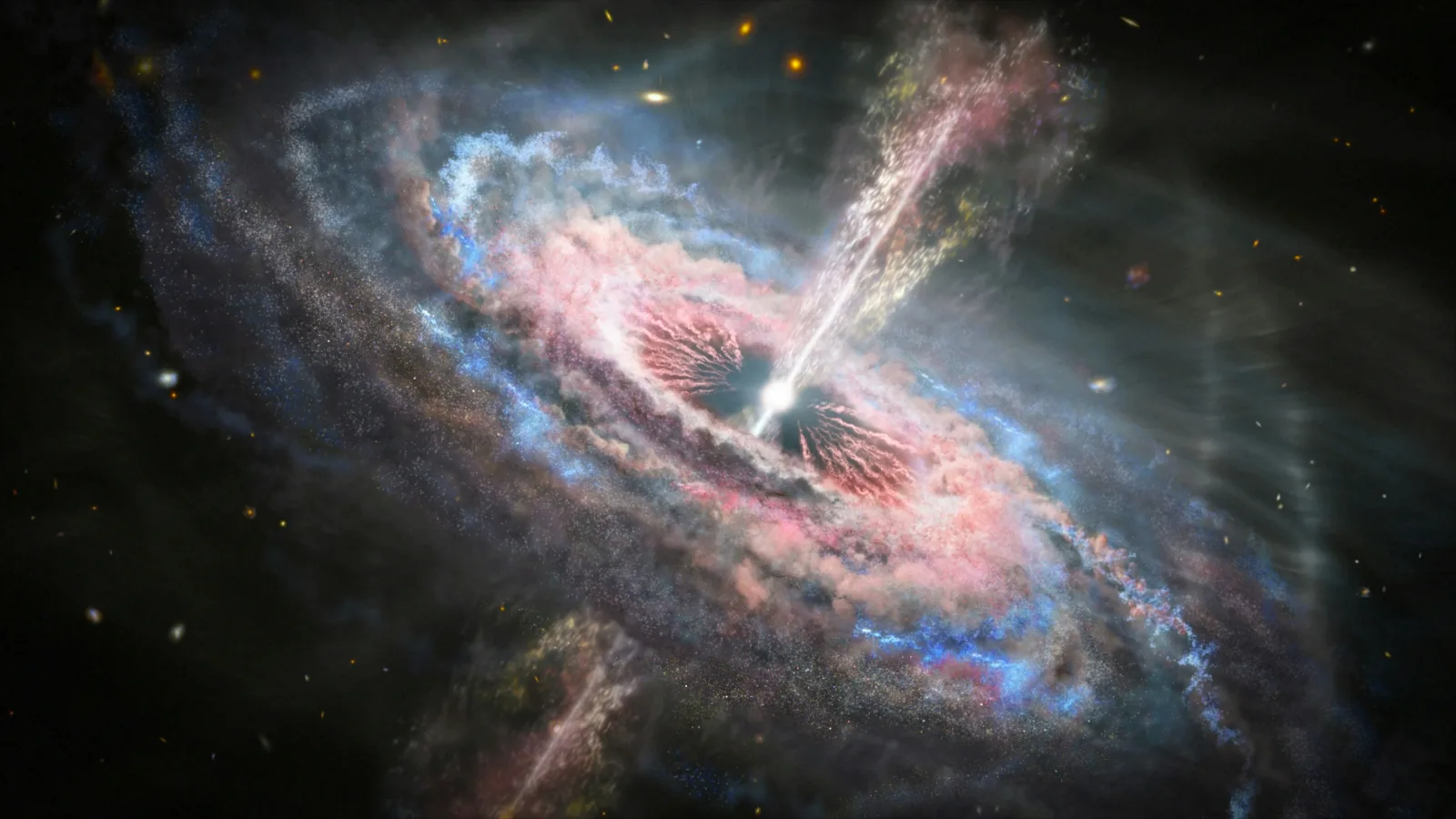
Black holes that differ in mass by millions of times appear to switch on delayed jets at the same stage of their feeding cycle, according to ScienceDaily, which published material provided by Curtin University. The study appeared in Nature Astronomy.
The research was led by Dr. Adelle Goodwin of Curtin University's International Centre of Radio Astronomy Research (ICRAR), with co-author Dr. Andrew Mummery of the Institute for Advanced Study in Princeton. ScienceDaily reported that the key idea came to them during a conversation in a bar in Madrid while they were attending a scientific conference.
The team studied tidal disruption events, in which a star passes too close to a supermassive black hole and is torn apart. They first looked at 20 such events and then selected 10 where the data allowed them to estimate both how fast the black hole was feeding and when its radio outflows appeared.
They found two stages when jets can appear. One comes early, when feeding is extremely intense. The other can come hundreds or even thousands of days later, when the feeding rate drops to about 2% of the Eddington limit, a benchmark astronomers use to measure how intensely a black hole is feeding. According to the report, that same 2% threshold has already been linked to jet formation in much smaller black holes in the Milky Way.
“"That tells us something fundamental about black holes: the physics does not seem to care how big they are."”Dr. Adelle Goodwin, astrophysicist, Curtin University
The finding matters for two reasons, according to the report. It offers a possible explanation for why some black holes produce jets soon after destroying a star while others stay quiet for months or years. It could also help astronomers plan their limited time on radio telescopes. The report cites the Square Kilometre Array Observatory, whose low-frequency component will be hosted in Western Australia.
"If we can anticipate when a black hole is more likely to launch a jet, we can run better targeted campaigns, waste fewer observations and improve our chances of catching these rare events at the moment they matter most," Dr. Goodwin said.
Some questions remain open. The pattern rests on 10 events. The report presents the forecasting benefit as a possibility: astronomers "may be able to" predict delayed jets if they can estimate when feeding will approach the threshold. It does not say whether any such prediction has yet been tested against a new event. It also does not explain why the threshold sits at that level.
This story is based on a single report, in ScienceDaily, drawn from a Curtin University release.