Bennu samples suggest the asteroid formed from mixed dust near the early Solar System's water-ice line
A chemical analysis by ETH Zurich researchers challenges the idea that Bennu came from the outer Solar System and points to a role for Jupiter, ScienceDaily reports.
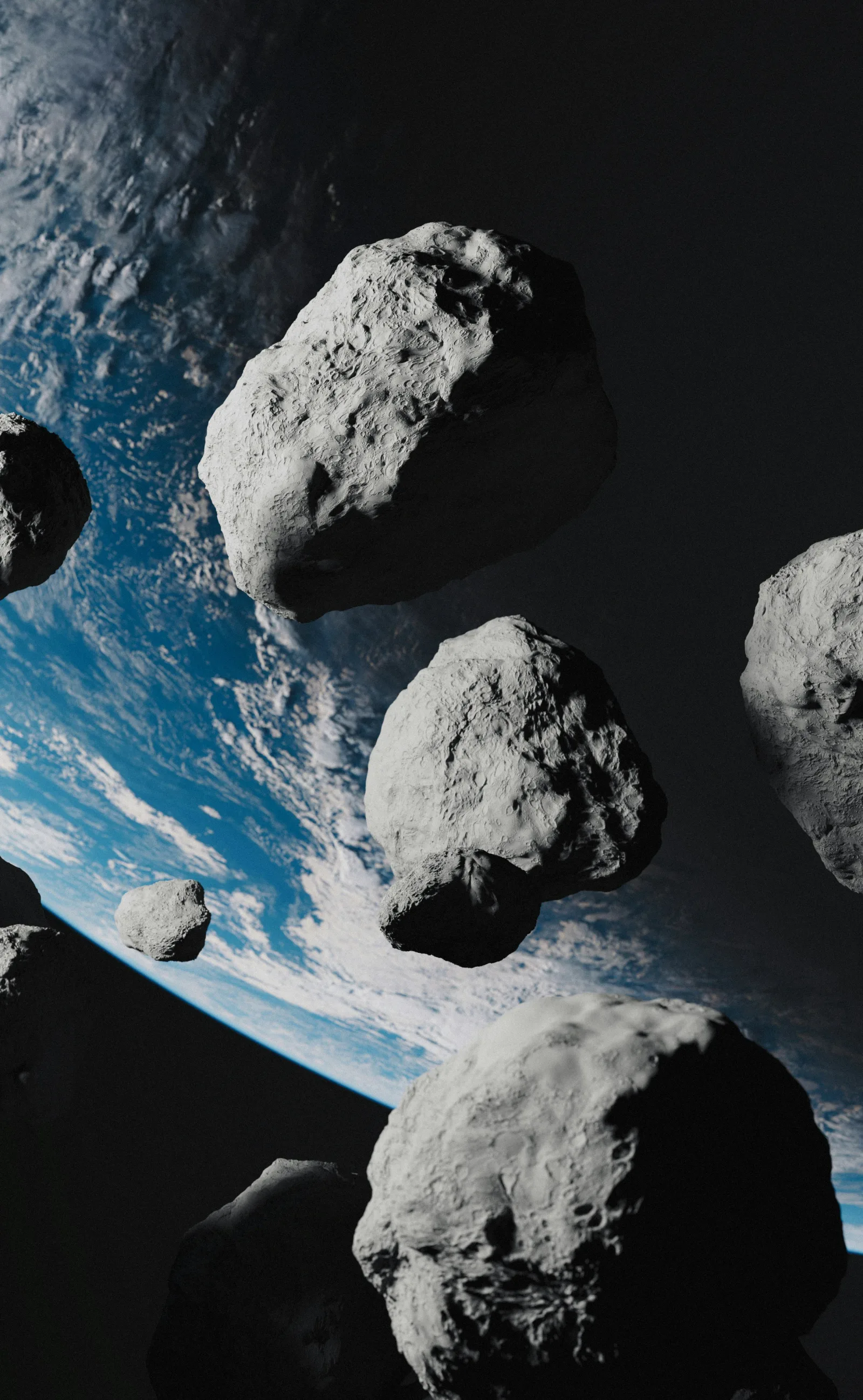
Material collected from asteroid Bennu shows that the asteroid formed from a mix of dust from the inner and outer early Solar System, according to ScienceDaily, which based its report on materials provided by ETH Zurich. The study was published in Science Advances.
NASA's OSIRIS-REx mission brought the samples to Earth. ScienceDaily reported that a capsule carrying about 120 grams of asteroid material landed in the Utah desert on September 23, 2023. The laboratory of Maria Schönbächler, Professor of Isotope Geochemistry at ETH Zurich, received half a gram.
Her team measured isotopes of iron, titanium and chromium. According to the report, iron and titanium are spread remarkably evenly through Bennu's material. The isotopic fingerprint closely matches that of the asteroid Ryugu and of CI meteorites, a rare group of carbon-rich, primitive meteorites. The three differ substantially from other known asteroids, meteorite groups and planets.
“"Bennu is a hybrid: the material does not clearly match either the inner or the outer Solar System."”Maria Schönbächler, ETH Zurich
Researchers had generally believed that primitive asteroids like Bennu came from the outer Solar System and formed relatively late. The new work challenges both ideas. The team proposes instead that Bennu's material came together near the water-ice line, the region of the young Sun's disk where it was cold enough for water vapor to freeze.
The researchers also describe a scenario involving Jupiter. As the planet grew, it may have stopped most larger particles from crossing its orbit while letting fine dust pass around it. That fine dust could then mix near the water-ice line. ScienceDaily reported that this could explain Bennu's abundance of water-bearing material and its chemical resemblance to the Sun.
This matters because Bennu's material has changed relatively little in about 4.5 billion years. Schönbächler said Bennu "may offer our best glimpse of the original mix of chemical elements from which the terrestrial planets were ultimately built." Its water-bearing minerals and organic compounds also bear on how early Earth got some of the ingredients needed for life. The report notes the findings do not establish exactly how those materials reached Earth.
Several questions remain open. Schönbächler said the team is now asking whether other asteroids share the same isotopic signature as Bennu and Ryugu. Researchers also want to pin down how Jupiter shaped the movement of dust, and whether it favored the build-up of very fine particles.
Schönbächler plans to apply for access to samples from a mission by Japan's space agency, JAXA, to the Martian moon Phobos. ScienceDaily reported that the mission is scheduled to launch at the end of October 2026, and its capsule is not expected back on Earth until 2031.