Astronomers report possible first moon beyond the Solar System, circling a brown dwarf
A team using ESO's Very Large Telescope says it has found a giant object orbiting a brown dwarf in the CD-35 2722 system. The finding has not been confirmed.
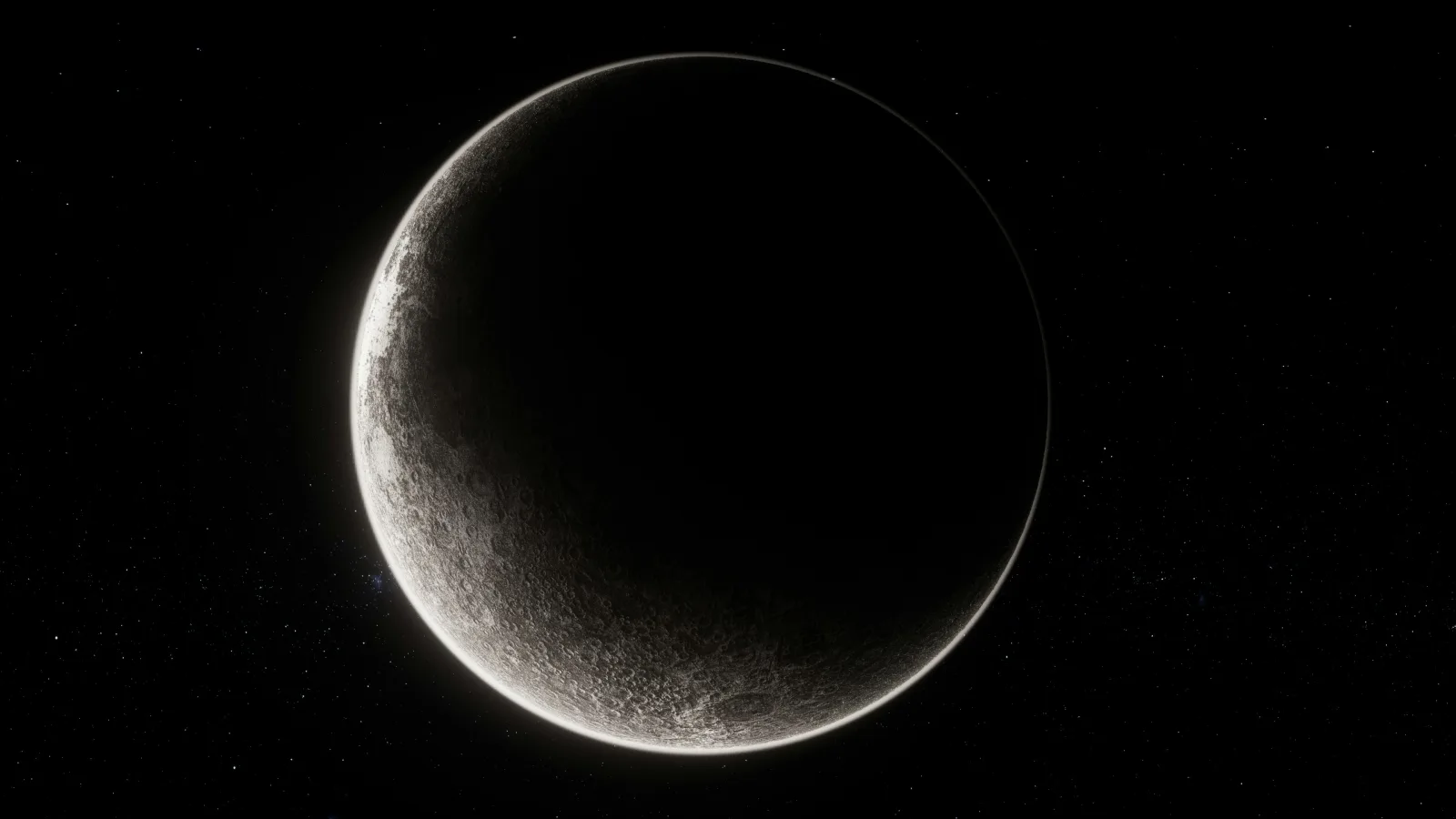
Astronomers may have found the first natural satellite outside our Solar System, according to a report by ScienceDaily based on materials provided by the European Southern Observatory (ESO). This story rests on that single report.
The object was found in the CD-35 2722 star system using observations from ESO's Very Large Telescope. It does not orbit a planet. It orbits a brown dwarf, which is more massive than a planet but not massive enough to become a star. That brown dwarf in turn orbits CD-35 2722, a star with about half the Sun's mass.
The researchers call the object an exosatellite. ScienceDaily reported that it has at least as much mass as Jupiter, while the brown dwarf it orbits is more than 30 times as massive as Jupiter. The report is not consistent on this point: it also quotes study collaborator Alice Zurlo describing the companion as "several times the mass of Jupiter."
The lead author is Kevin Hoy, an ESO student based in Chile, and the study was published in Nature. Hoy called the system's arrangement "super weird" compared with our own Solar System.
“"The exosatellite is clearly massive enough to be a planet, but it does not orbit a star, though it orbits an object that orbits a star."”Kevin Hoy, lead author
The team used the CRIRES+ instrument and the radial velocity method. This method measures tiny wobbles in an object's motion caused by the pull of a companion. By studying small changes in the brown dwarf's motion, the researchers found what they consider strong evidence that another massive body orbits it.
The finding matters because no moon outside the Solar System has yet been confirmed. ScienceDaily reported that more than 6,000 exoplanets have been identified, but only a handful of possible exomoons have been put forward, with limited evidence behind them. Earlier in 2026, a team led by Quentin Kral reported possible signs of a satellite in the HD 206893 system but did not establish a definite detection.
Zurlo, director of the Millennium Nucleus of Young Exoplanets and their Moons in Chile, called the result "the first plausible detection of an exosatellite."
The discovery also raises a question about labels. Astronomers have not agreed on an official definition of an exomoon, and this object is massive enough to count as a planet under some classification schemes.
Much is still unknown. The detection has not been confirmed, and the report gives no timeline for follow-up work. It is also not known whether massive satellites like this one are rare or common. ScienceDaily reported that ESO's upcoming Extremely Large Telescope, with a 39-meter mirror, is expected to help astronomers detect smaller exomoons that current observatories cannot see.