Ancient Chinese record of 709 BCE eclipse sharpens estimate of Earth's past rotation
Researchers corrected the location of ancient Qufu by about eight kilometers and say a later text may describe the solar corona, ScienceDaily reported.
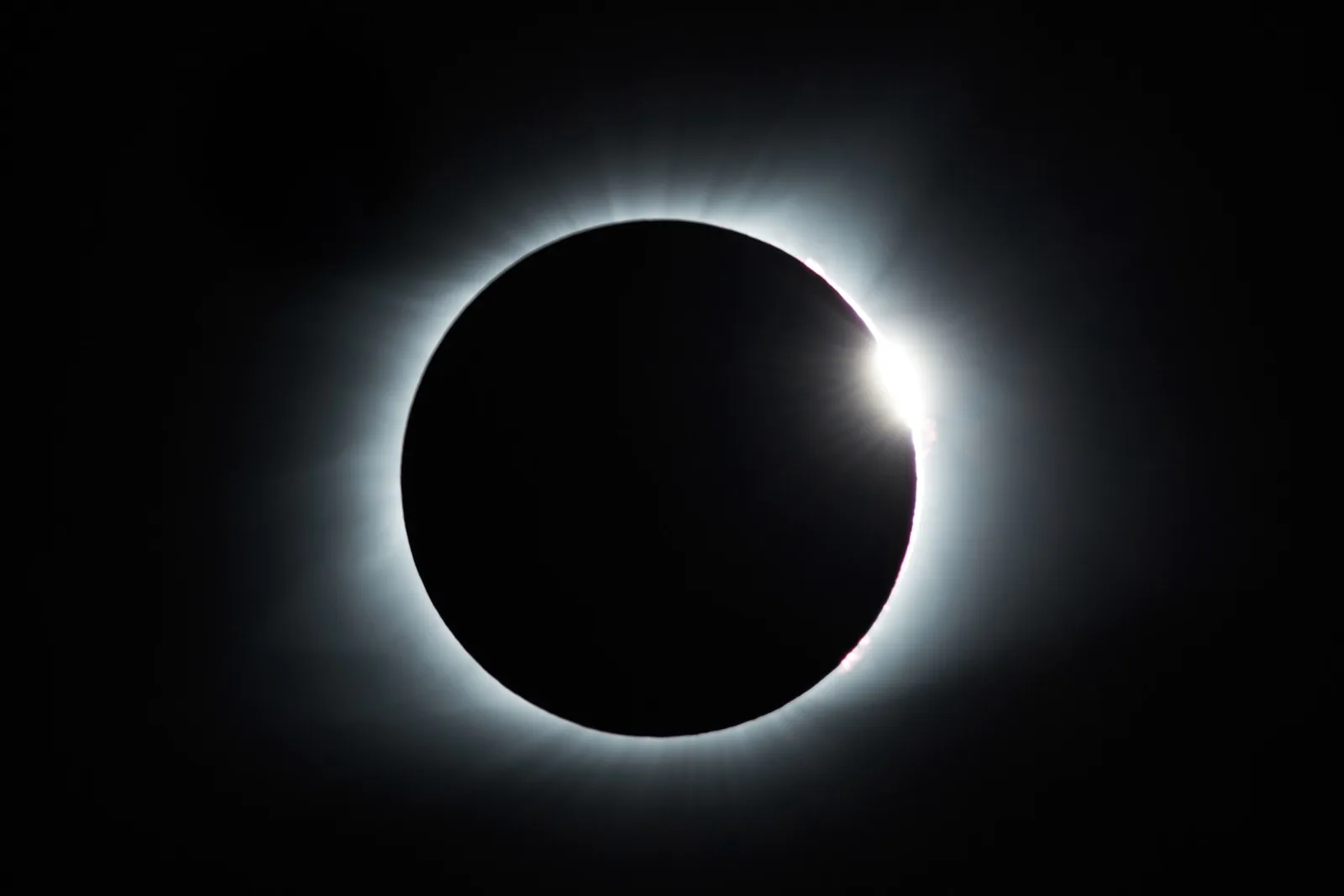
An international research team has reconstructed a total solar eclipse seen in 709 BCE from Qufu, the capital of China's ancient Lu Duchy. The team used it to refine estimates of how fast Earth was rotating at the time, according to ScienceDaily, which published materials provided by Nagoya University. The findings appeared in Astrophysical Journal Letters.
The eclipse took place on July 17, 709 BCE. It was recorded in the "Spring and Autumn Annals," a chronicle compiled roughly 200 to 300 years later, which stated that "the Sun was totally eclipsed."
At first, the record seemed to conflict with modern calculations. Those calculations suggested a total eclipse would not have been visible from the assumed location of the Lu court. The team traced the problem to the city's coordinates. Using archaeological excavation reports and historical geographic evidence, they concluded that earlier work had placed ancient Qufu about eight kilometers from its actual site.
With the corrected position, the researchers put delta T for the eclipse between 20,264 and 21,204 seconds. Delta T is a measure of variation in Earth's rotation relative to a uniform time scale. ScienceDaily reported that Earth's spin has slowed over long periods, partly because of tidal friction linked to the Moon, so Earth turned slightly faster 2,700 years ago than it does today.
"This new dataset fixes coordinate errors in previous Earth rotation studies," said coauthor Mitsuru Sôma of the National Astronomical Observatory of Japan.
According to the report, the measurements help scientists understand changes in the length of Earth's day over thousands of years. They can also improve calculations of when and where other ancient astronomical events would have been visible.
The team also examined a passage in the "Hanshu" (Book of Han), written about seven centuries after the eclipse. It describes the eclipsed Sun as "completely yellow above and below," a description traditionally linked to the solar corona.
“If this is truly the case, it represents one of the earliest surviving written descriptions of the solar corona.”Hisashi Hayakawa, lead author, Nagoya University
The researchers said the apparent structure of the possible corona suggests the Sun may have been near the peak of its roughly 11-year cycle. The eclipse came shortly after a long quiet period known as the "Neo Assyrian Grand Minimum" or "Homer Grand Minimum," which lasted from about 808 to 717 BCE. ScienceDaily reported that this fits earlier reconstructions of solar activity based on radiocarbon in tree rings.
The biggest open question is the corona account itself. The passage was written centuries after the event, so it cannot be considered definitive proof, according to ScienceDaily. The report does not say how scientists outside the research team have responded to the findings.