Leap second to be scrapped from 2027, letting clocks drift up to an hour from Earth's rotation
A resolution adopted at a conference in Versailles ends the leap second. Atomic time and Earth's rotation may drift apart by up to an hour.
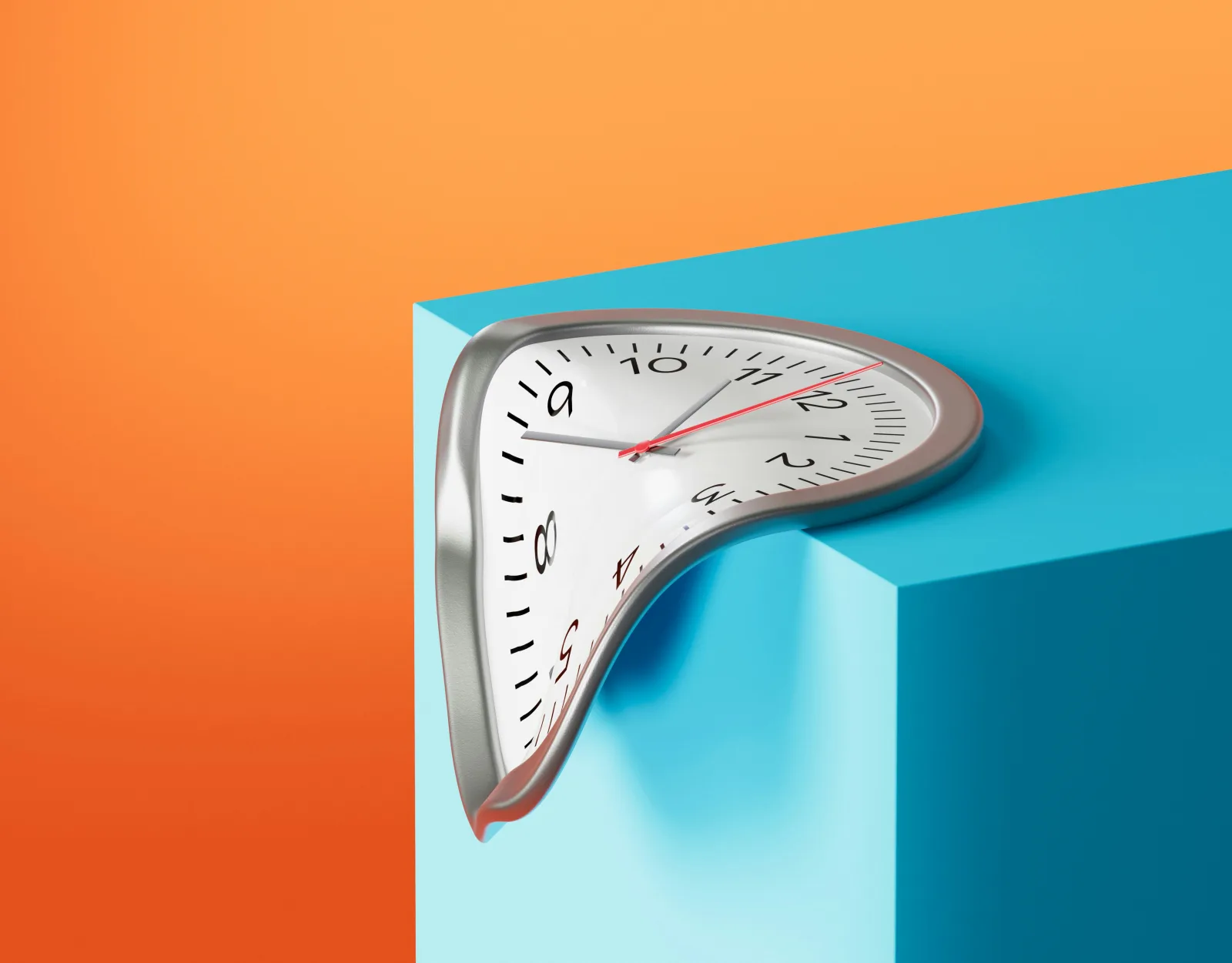
The leap second is being dropped, according to a report by Universe Today. A resolution adopted at the 28th General Conference on Weights and Measures (CGPM), held in Versailles, France, in early October, ends the occasional insertion of an extra second by the International Bureau of Weights and Measures (BIPM).
Universe Today reported that the leap second was used to keep Coordinated Universal Time (UTC) in line with Universal Time (UT1), which follows the Earth's rotation. Under the new resolution, the gap between the two can grow to as much as 3,600 seconds, or one hour. The change takes effect on May 20, 2027, the outlet reported.
Leap seconds began in 1972. According to Universe Today, 27 have been added since then, and the last one was inserted at the end of December 31, 2016. The system also allowed for seconds to be removed, but that never happened.
The outlet said the adjustment was needed because the Earth's rotation is not entirely uniform. Earthquakes, shifts in tectonic plates and ice loss all play a part. The planet's rotation is also slowing, mainly because of tidal friction with the Moon.
Leap seconds also caused technical problems. Universe Today reported that LinkedIn, Reddit and the airline Qantas all had issues when a leap second was added in 2012.
David Herald of the International Occultation Timing Association told Universe Today that the change does not alter the fact that the Earth's rotation is not constant.
“With the new arrangement, time will be strictly uniform, so the time of an astronomical event can be reliably predicted years in advance. The issue of the irregular rotation of the Earth is dealt with where it belongs: the Earth's rotation.”David Herald, International Occultation Timing Association
For events that depend on where an observer stands, Herald said, "For events where your location on the Earth's surface is important (e.g. a solar eclipse path), nothing will change."
The outlet said most people are unlikely to notice. Over an average lifetime, the leap seconds that would have built up add up to very little. Local solar time will slowly move away from clock time.
Some questions remain open. Universe Today said that at some point, perhaps centuries or even a millennium or two from now, the bodies responsible for timekeeping may have to meet and decide how to bring the two clocks back into line. That could mean adding minutes, possibly up to a "leap hour." The report did not say how or when that decision would be made.
The outlet also said the current definition of the second, based on caesium atomic clocks and set in 1967, may change in the coming decade. It added that crewed missions to the Moon will need an agreed fixed time scale.