Russian satellite came very close to US-owned imaging satellite used by Ukraine, tracker says
Ars Technica, citing LeoLabs, reports that Kosmos 2612 approached, circled and stayed near ICEYE-X36 in low-Earth orbit before moving away.
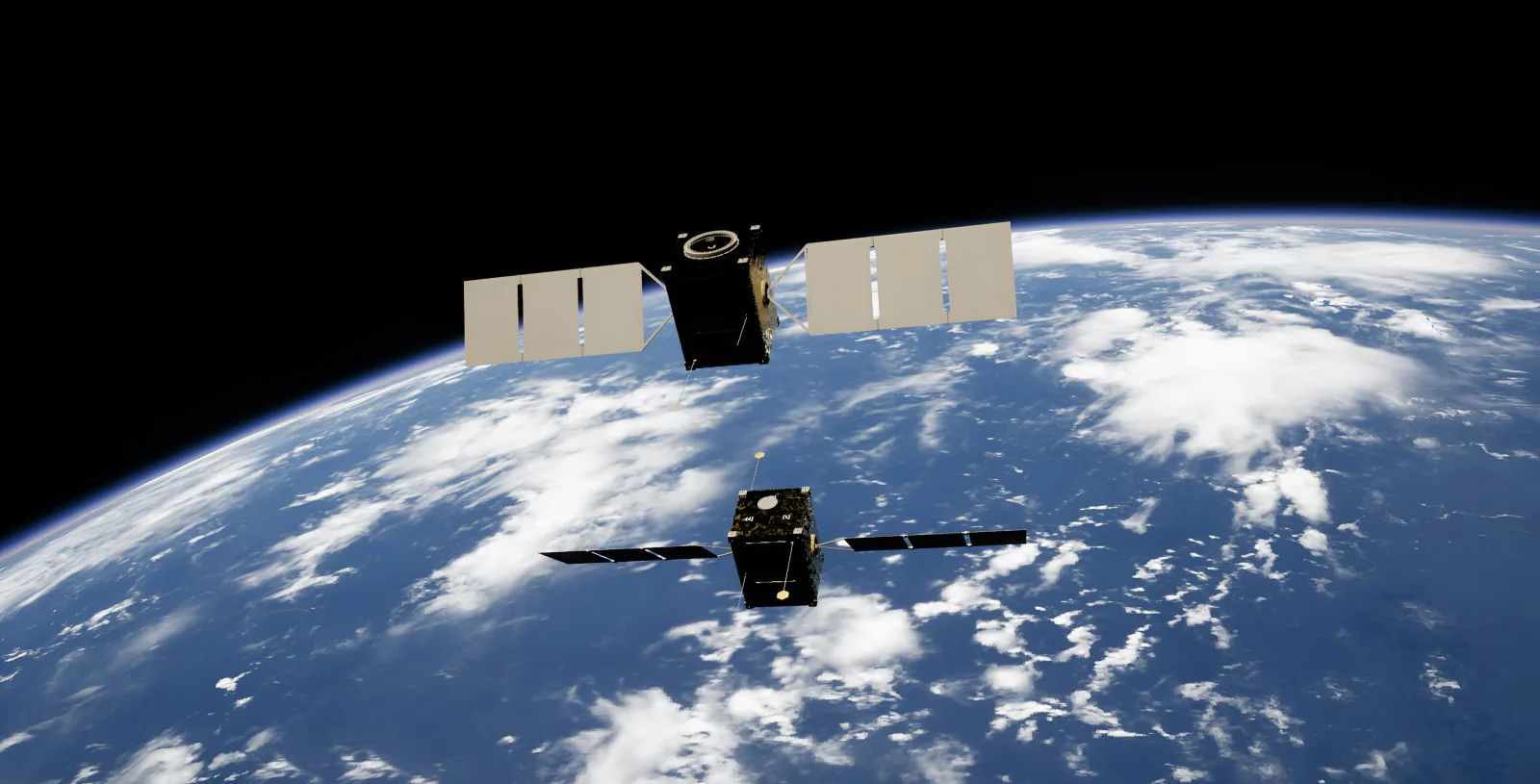
A Russian military satellite moved very close to a US-owned commercial imaging satellite used by Ukraine and stayed near it over the weekend, according to Ars Technica, which cited the orbital tracking company LeoLabs.
LeoLabs said the Russian spacecraft, Kosmos 2612, "conducted a deliberate series of maneuvers toward ICEYE-X36, a US-operated commercial imaging satellite." The company said Kosmos 2612 closed in from hundreds of kilometers away, maneuvered around ICEYE-X36, remained nearby for an extended period and then began moving away.
By Friday, Kosmos 2612 was holding station 2 to 3 kilometers away, LeoLabs said. Over the weekend the two satellites were within 500 meters of each other and "likely quite a bit closer than that," Adam Marsh, LeoLabs' vice president of technical solutions, said. As of Monday, Marsh told Ars Technica, Kosmos 2612 was moving away at a relative speed of about 17 kilometers per hour.
“"This was not a routine conjunction or 'fly by.'"”LeoLabs
Ars Technica reported that Russia has previously placed satellites in orbits close to secret US government spy satellites. This time, the target was a commercial satellite, and the Russian spacecraft got much closer and stayed longer. Jonathan McDowell, an astrophysicist who tracks satellite activity, wrote on X that to his knowledge this was the first rendezvous of two active satellites in low-Earth orbit without the approval of one owner. Marsh said it was the first time LeoLabs had seen this kind of event without consent.
ICEYE is a Finnish company that operates radar imaging satellites able to see through cloud and darkness. Its US subsidiary, ICEYE US, owns ICEYE-X36. According to Ars Technica, ICEYE provides imagery to Ukraine, the US military and several European defense ministries. A Russian government official said in 2022 that civilian satellites supporting Ukraine's military are a "legitimate target," the outlet reported.
Retired Lt. Gen. John Shaw, a former deputy commander of US Space Command, called the approach a provocation. He said the best interpretation so far was "clear messaging that they will intentionally conduct aggressive activity near platforms they perceive as actual or potential threats to their interests."
Several questions remain open. There were no reports of physical damage to ICEYE-X36 by the time Kosmos 2612 began moving away on Sunday, Ars Technica reported. The report does not say what Kosmos 2612 did while it was close to the satellite, and it includes no response from the Russian government. Ars Technica also reported that at least four of the six satellites from the April launch that carried Kosmos 2612 had adjusted their orbits to line up with ICEYE-X36. The report does not say what those satellites are for.
"We are aware of the situation and tracking it closely," an ICEYE US spokesperson told Ars Technica.